
Confined spaces are complicated when it comes to welding. A safe atmosphere in a confined space is one that has a safe oxygen level, is free of airborne contaminants (or in concentrations known to be below their allowable exposure standard), and any flammable gas, vapour or mist is at concentrations below 5 percent of its lower explosive level.
However, when welding, especially in an enclosed or partially enclosed space, it is normal for any welding task to at least potentially create an atmosphere that has airborne concentrations above the relevant exposure standards or >5% of relevant explosive limits.
So, how do you identify a confined space and what practical steps can be taken should welding be required within a confined space?
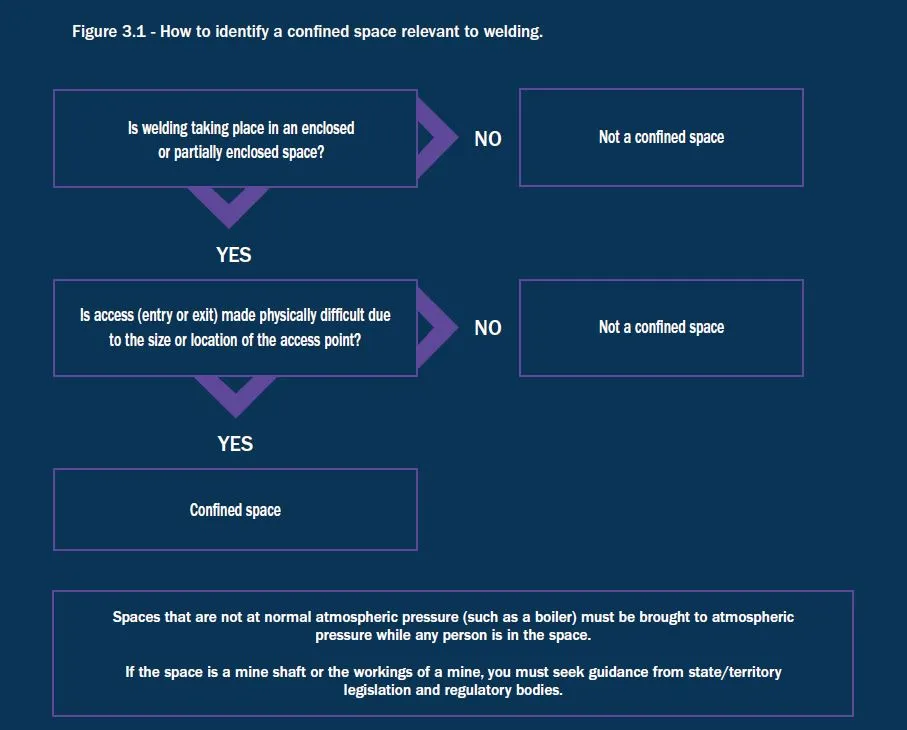
Check out the diagram below for advice on how to identify a confined space relevant to welding:
‘Confined spaces pose dangers because they are usually not designed to be areas where people work. Confined spaces often have poor or no ventilation which allows hazardous atmospheres to quickly develop, especially if the space is small’1.
‘A confined space is determined by the hazards associated with a set of specific circumstances and not just because work is performed in a small space’1. ‘Entry into a confined space means a person’s head or upper body is in the confined space or within the boundary of the confined space’1.
Within the welding industry, confined spaces are commonly found in tanks, pipes, containers, pressure vessels, shafts, tunnels or other similar enclosed or partially enclosed structures.
How to control welding fume when welding in a confined space is unavoidable
Confined spaces can be deadly and decisions on how to handle a specific confined space must be assessed on the spot and always comes down to the specifics of the individual situation.
Confined spaces are a multifactorial issue, and protection against welding fume is only one of the issues that needs to be considered.
There should be a suitably trained and knowledgeable person doing the assessment and design of a safe system for any confined space entry.
If welding in a confined space, ensure that the employee doing the confined space assessment is suitably trained having completed a confined space course by a qualified training company or engage a trained consultant. If unsure, please contact AWS (www.apexweldingsafety.com.au) for more information.

Welding fume is serious. Action is required.
Ready to take action against welding fume? For a comprehensive breakdown and in-depth examples of how suitable controls can be properly implemented, you can download the AWS Practical Guide to Welding Fume Control for free below.
Find out more by reading the Practical Guide to Welding Fume Control
- Confined Spaces, Code of Practice, Safe Work Australia, October 2018