
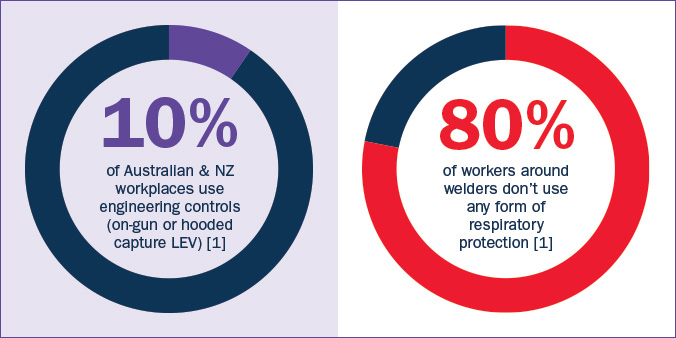
Based on a recent survey conducted by AWS, only 10% of Australian and New Zealand workplaces use engineering controls (such as on-gun fume extraction or hooded capture LEV) to remove welding fume from the environment and 28% can still see and smell welding fume in the workshop before the welding starts in the morning. This is a concern when the same survey found that 80% of workers who work around welders are not wearing ANY form of respiratory protection [1].
Removing welding fume from the environment
It is an employer’s legal responsibility to reduce welding fume exposure to as low as reasonably practicable for all persons, not just the welder. On-Gun Fume Extraction LEV and Hooded Capture LEV are two common methods used to reduce welding fume exposure to all workers by capturing welding fume at the source and removing it from the environment.
In a recent study, on-gun fume extraction was found to remove 33% more welding fume from the workplace environment compared to LEV hooded capture [2].
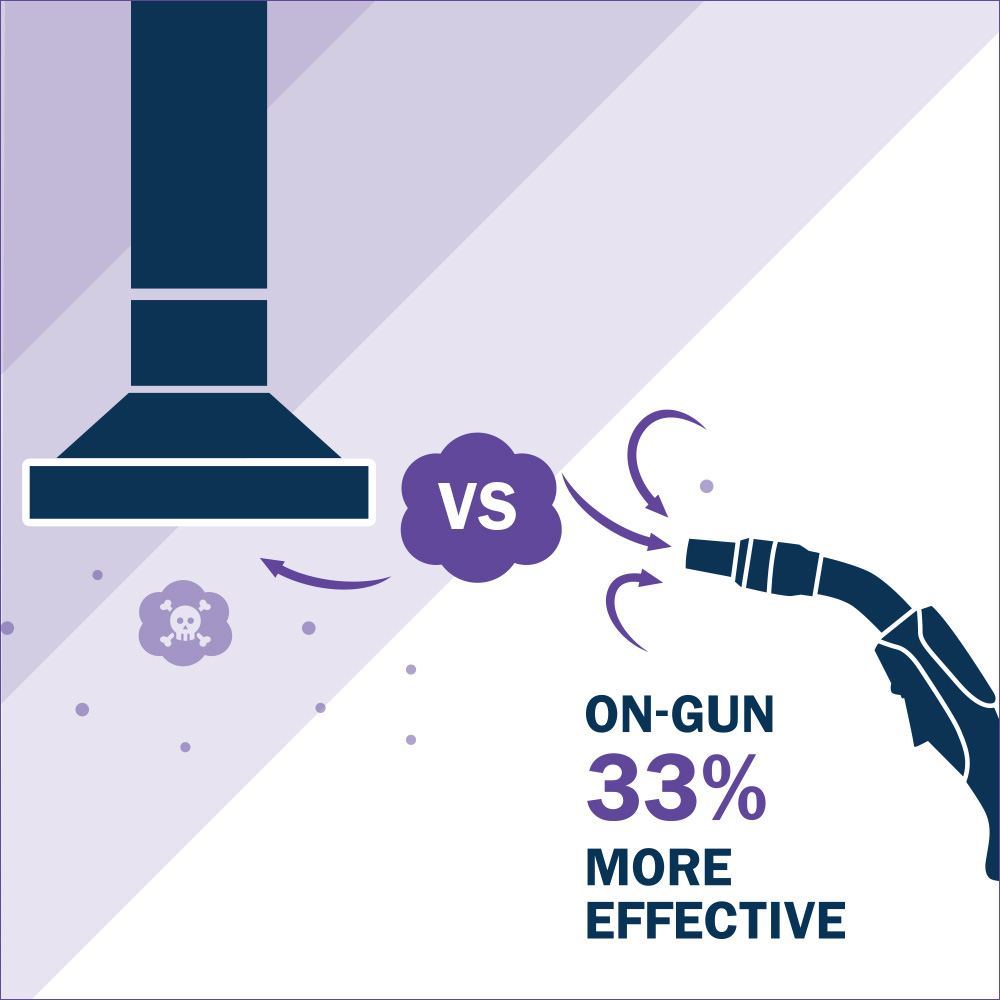
On-gun fume extraction also has the added benefit of following the welder as the welder moves, unlike fixed LEV hooded capture that requires the welder to be perfectly positioned relative to the capture hood and for the welder and welding arc location to remain relatively stationary.
In that vein, measurements taken during the study suggested that exposure to welding fume can approximately double when the capture hood distance from the arc increased from 30cm (correct distance from the arc based on manufacturer’s instructions) to 50cm [2].
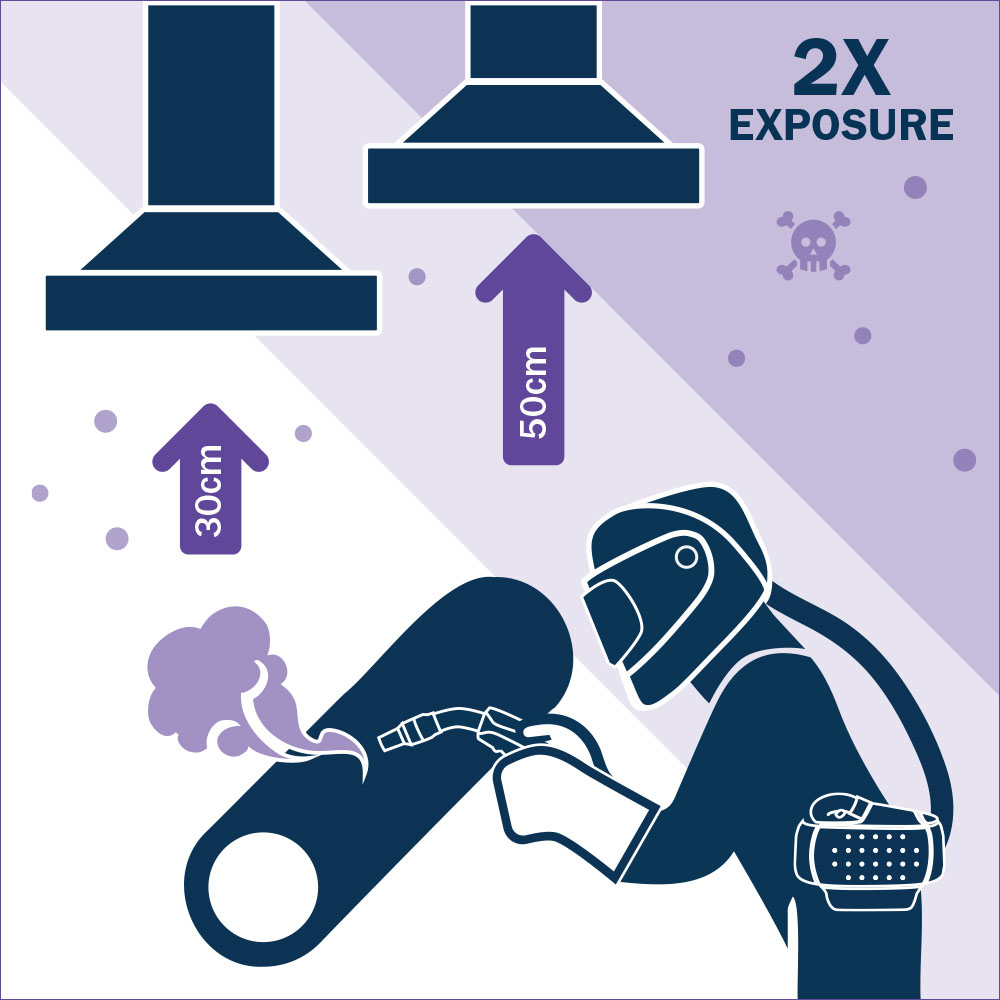
This has large implications for welders who do not remain stationary or for those who are doing long welds. For this reason, it’s important that employers match the engineering controls with their welders’ needs, requirements, and environmental factors. Based on the recent AWS survey, 78% of welders require mobility when they are welding [1].
Finally, the results of the Scientific Study have been used to create the Welding Fume Product Control Selector Tool, which can help you make the right decisions when it comes to controlling welding fume exposure in your workplace.
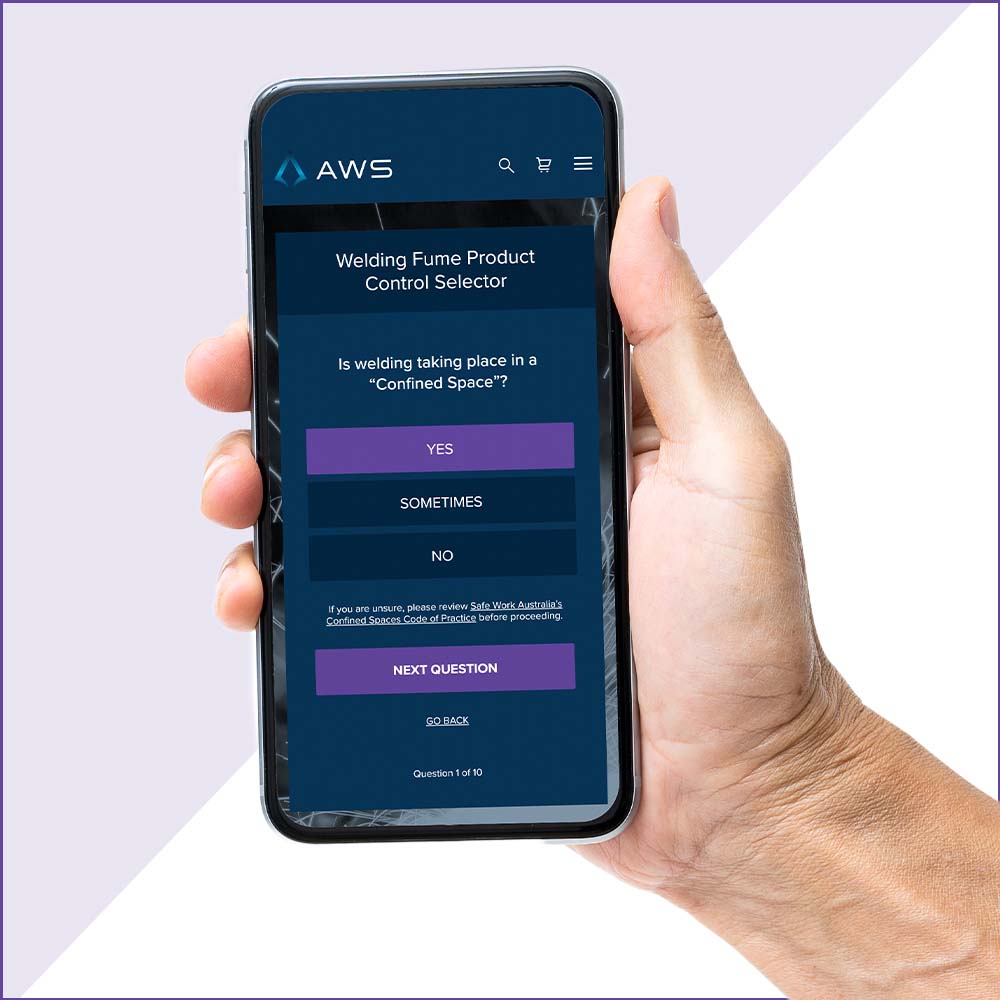
Try the Welding Fume Product Control Selector here
References:
[1] Welding Fume Product Controls Survey, AWS, June 2023 (560 respondents)
[2] 2023 Peter Knott, Georgia Csorba, Dustin Bennett, Ryan Kift. Welding fume; a comparison study of industry used control methods. Safety Journal.