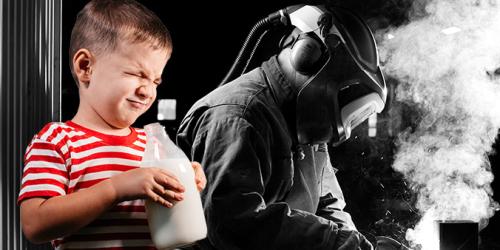

Welding helmets with integrated powered air purifying respirators (PAPR) are established as ‘the most widely used form of respiratory protection amongst welders in Australia and New Zealand’1. This is far from surprising given the cooler, cleaner, and more comfortable welding experience afforded by a constant flow of filtered air directly into the welder’s breathing zone.
The level of protection delivered by these welding helmets with PAPR is represented by a Required Minimum Protection Factor (RMPF) of 50. This indicates that the respirator can supply at least 50 times cleaner air than the welder would otherwise breathe unprotected.
However, the results of a NEW Independent Scientific Study have revealed that PAPR welding helmets can reduce welding fume exposure by a much greater factor.
What does the study reveal about powered air?
The purpose of this study was to run different test scenarios on the primary welding fume control methods to determine their full capabilities besides simply meeting the minimum requirements for protection.
Among many eye-opening results, perhaps the most extraordinary was that welding helmets with integrated PAPR were shown to have an Effective Protection Factor (EPF) of AT LEAST 2,600!
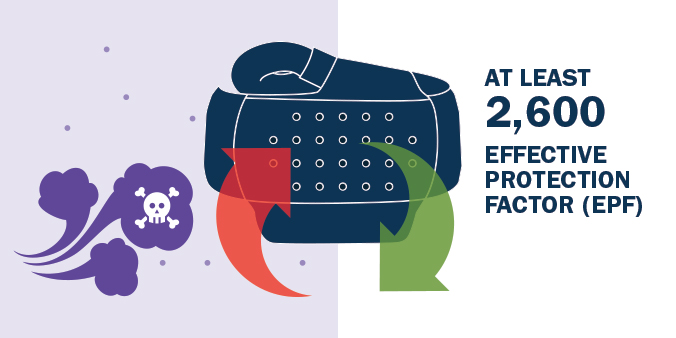
This means that a powered air respirator can reduce welding fume exposure to at least 1/2600th of the outside concentration, equivalent to a minimum 99.96% reduction in exposure.
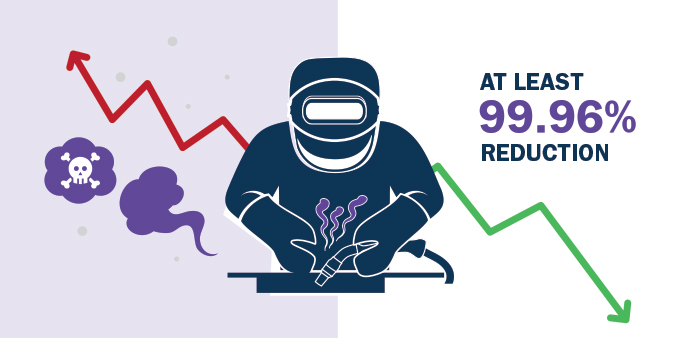
What’s more, this demonstrates a level of performance at least 52 times better than the RMPF of 50 specified in the Australian and New Zealand standard for respiratory protection (AS/NZS1715:2009).
These results are great news for both welders and employers looking to protect their welders, offering evidence that a Welding Helmet with a PAPR can be an extremely effective solution to reduce the welder’s welding fume exposure to far below the workplace exposure standards.
How does PAPR compare to other welding fume control methods?
Finally, these findings establish PAPR as by far the most effective control measure when it comes to protecting the welder from exposure to welding fume. A powered air welding helmet should therefore be considered a priority in situations where the welder is the only person requiring protection from welding fumes.
By contrast, On-Gun Fume Extraction and Hooded Capture LEV are primarily engineered to remove fume from the environment, protecting both the welders and those working near welding operations in the process. Consequently, where the priority is capturing welding fume at the source to protect welders and surrounding workers, fume extraction should be implemented to complement the use of a welding helmet with PAPR.
See the full results of the Scientific Study here
Download a Key Fact Document with all the main takeaways here
View the range of Speedglas Welding Helmets with Adflo PAPR here
References:
(1) 2020 Welding Fume and Respiratory Protection Survey, AWS